Shopping Cart





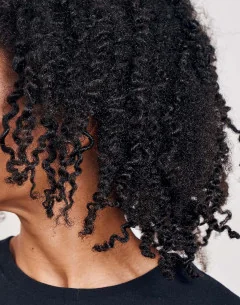


Covering grey and white hair with plants is entirely possible — when you have the right method. Our certified COSMOS Organic colour, 100% organic and made in France, covers up to 100% of white hair thanks to a two-step ritual: a preparation step followed by the colour itself, with a thermometer included so the result is never left to chance.
White hair is not simply hair that has lost its colour — it has lost its pigment entirely. As melanin disappears, the fibre becomes coarser, drier and far more resistant to colour. That is why a single, one-pass application so often disappoints on grey: the shade looks washed out, sometimes pulls warm or coppery, and fades within a few washes.
The truth is that white hair has to be prepared before it can hold a colour. A preparation step — a kind of pre-colour — recreates the foundation the fibre needs so that pigment can grip evenly and last. Most people who feel let down by plant-based colour have simply never done this step. Often it is missing from the product altogether, or explained so poorly that it gets skipped. The result is the familiar verdict: "plant colour doesn't cover." The problem was never the plant. The problem was not having everything needed to succeed.
One of the most common worries is simple: "If I colour my greys with plants, will I end up ginger?" It is a fair concern. On white hair, browns and chestnut tones applied in a single pass really do tend to turn coppery, because there is no pigment foundation underneath for the colour to settle into.
The answer is a two-step method. First, the Base rebuilds a pigment support inside the prepared fibre. Then the Colour deposits a deep, rich tone on top of that foundation. Worked this way, browns, chestnuts and espresso shades come out genuinely dark, luminous and dimensional — without the orange cast. You keep your hair dark, naturally, with depth that catches the light rather than a flat, brassy finish.
Three factors decide whether grey hair is truly covered. Get them right and the result is reliable every time.
And the result keeps developing after you rinse. Over the following 24 to 48 hours the colour oxidises in contact with the air — it deepens and settles into its final tone. A shade that looks light on day one will be noticeably richer by day two. Everything you need to get all three factors right is gathered in a single pack.
Choosing plant-based colour for grey hair is, above all, choosing to care for it. Our colour is certified COSMOS Organic, with 100% of its ingredients organic, and it is made in France — free from ammonia, free from PPD, free from oxidants. Instead of stripping and weakening the fibre, the plant powders coat and reinforce it.
The difference shows over time. Hair feels thicker and looks glossier, lengths are easier to manage, and the scalp — which often becomes more sensitive with age — is respected rather than irritated. This is colour that strengthens rather than fragilises: a treatment that happens to add colour, not a chemical process you have to recover from. For anyone who has spent years watching conventional colour dry out their hair, it is a genuinely different experience.
Plant-based colour is not something we invented — colouring plants have been used for centuries. What we set out to do is make it simple, reliable and effective: to improve the experience and, above all, the result. The value is in the pack itself.
Everything is in the box: two sachets — the first for preparation and pre-colour, the second for the colour itself — a thermometer, and clear step-by-step instructions. In other words, everything you need not to get it wrong. Elsewhere, that crucial preparation step is too often left out or barely explained, which is exactly why so many people conclude that plant colour "doesn't work." We removed the guesswork.
This complete pack was imagined by Jung Ae, co-founder of Tresse Paris, who wanted a ritual anyone could follow at home with salon-grade results. It is certified COSMOS Organic, 100% organic, made in France, winner of the Natexbio Challenge 2024, and rated 4.73/5 by more than 680 customers — covering up to 100% of white hair. Proof that caring for your hair and covering your greys are not a compromise, but the same choice.
The best natural colour for grey hair is a genuine 100% plant-based colour, certified COSMOS Organic, applied with a preparation step. On white hair, a single pass rarely covers well; a two-step ritual — a Base to rebuild pigment support, then the Colour — is what delivers full, lasting coverage without an orange cast. Look for organic certification and a clear preparation step.
Yes — up to 100% — but only with the right method. Resistant white hair is dry, coarse and pigment-free, so it needs to be prepared first. With the Base step never skipped, the correct temperature and a long enough processing time, even stubborn greys are fully covered. The frequent disappointment with plant colour almost always comes from skipping that preparation step.
Because white hair has lost its pigment, there is nothing for a single application to grip. The first step, the Base, rebuilds a pigment foundation inside the fibre; the second step, the Colour, deposits a deep, rich tone on top. This is what allows browns, chestnuts and espresso shades to stay genuinely dark and luminous on grey, instead of turning coppery.
Because the pigment coats and bonds to the fibre rather than being stripped in, coverage is durable and grows out softly without a harsh regrowth line. The colour even keeps developing for 24 to 48 hours after rinsing as it oxidises in the air, deepening into its final tone. Most people refresh as new growth appears, typically every few weeks.
Choose a shade close to your natural base or one tone darker for the most natural blend, and lean towards cool or ashy tones if you want to avoid warmth. The darker the target shade on a high proportion of white hair, the more important the Base step and a sufficient processing time become. The step-by-step guide in the pack helps you match the right shade to your starting point.
Yes, and it is often an ideal choice at this stage. Menopausal hair tends to be drier and finer, and the scalp more sensitive. Because this colour is free from ammonia, PPD and oxidants, it respects the scalp while the plant powders coat and strengthen the fibre — adding body and shine rather than further drying the hair. It covers the greys and cares for the hair at the same time.