Plant-Based Hair Color: A Certified Natural Alternative
Plant-based hair color is a method of hair coloring that uses exclusively tinctorial plants to deposit color onto the hair fiber without relying on the chemical agents found in conventional dyes. Unlike standard oxidative hair colors, it contains no ammonia, no resorcinol, and no paraphenylenediamine (PPD) — the allergenic molecules responsible for the majority of skin reactions observed after chemical coloring.
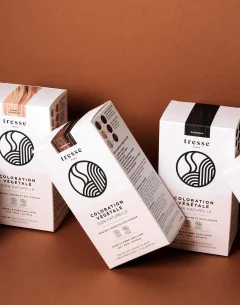
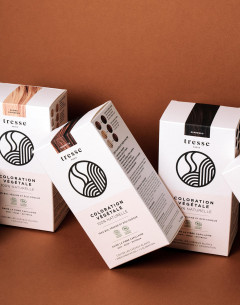
Tresse Paris offers a range of natural hair color certified COSMOS Organic, meaning at least 95 % of ingredients are of natural origin and the entire production chain is monitored by an independent certification body. This certification guarantees the absence of risky synthetic ingredients, full traceability of raw materials, and adherence to responsible production practices.
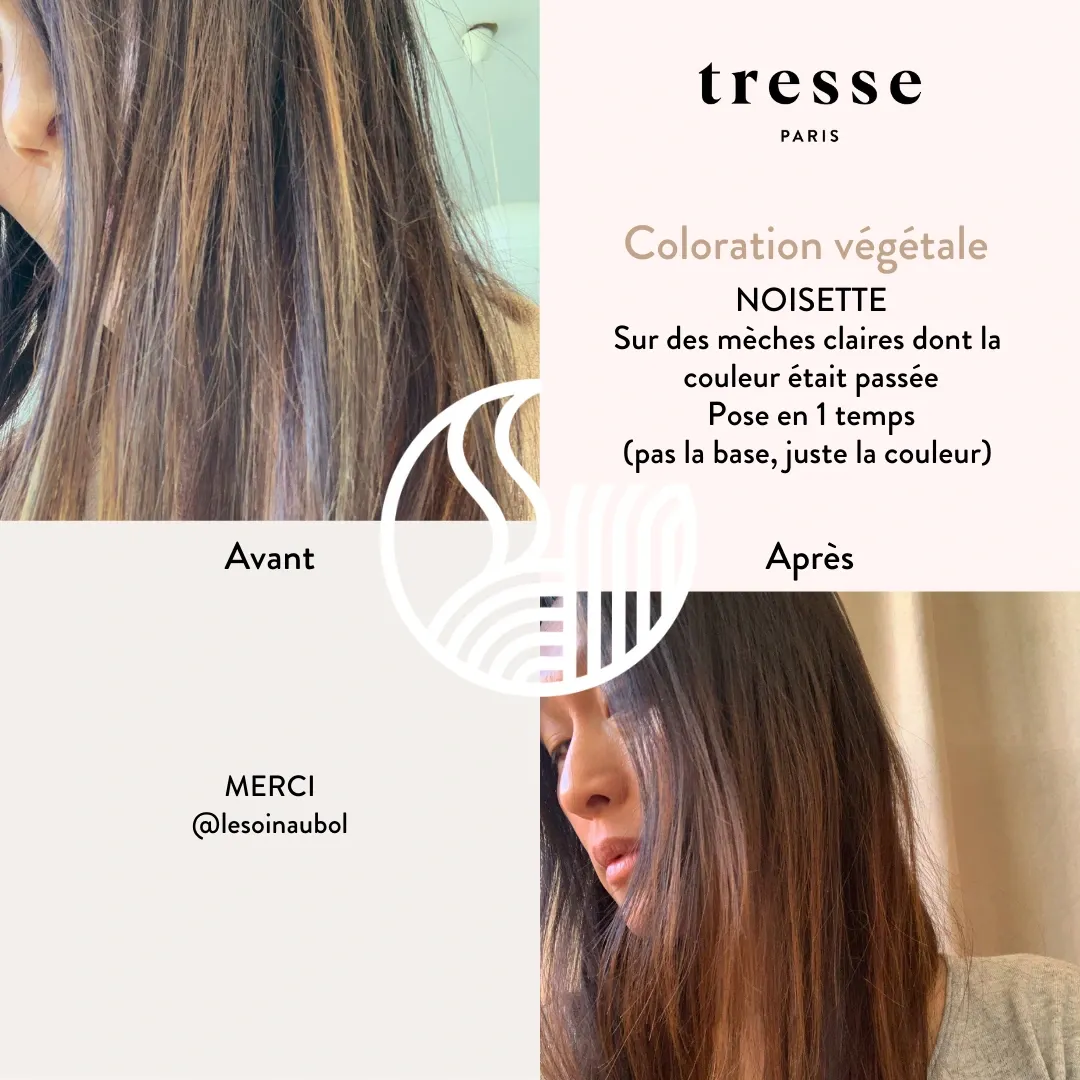
Plant-based hair color works by coating the hair fiber rather than penetrating the cortex as oxidative dyes do. The result is a shade that is layered over the hair’s natural color, enriching, deepening, or modifying it depending on the plants used and the underlying tone.
Why Choose Plant-Based Hair Color?
The switch to natural hair color is often driven by multiple combined motivations: scalp sensitivity, allergic reaction to conventional dye, a desire to reduce exposure to endocrine disruptors, or simply a wish to take better long-term care of hair health.
The synthetic colorants used in conventional dyes are associated with documented risks: PPD is classified as a strong allergen by the European Commission, resorcinol is a recognized endocrine disruptor, and ammonia causes the cuticle to swell, weakening the fiber with each application. A certified plant-based hair color eliminates these risks at the source.
Beyond health, natural hair color is part of a responsible consumption approach. The formulas are biodegradable, the ingredients come from organic or controlled agriculture, and the packaging is eco-designed. Each application therefore has a much lower environmental impact than its chemical equivalent.
Who Is Plant-Based Hair Color For?
Plant-based hair color is suitable for a very wide range of hair profiles:
- Sensitive or reactive scalps — no chemical irritants, gentle formula tolerated by even the most delicate skin
- People allergic to conventional hair colors — no PPD, no resorcinol, no ammonia
- Those who want to cover grey hair naturally — progressive and harmonious coverage, without harsh demarcation lines
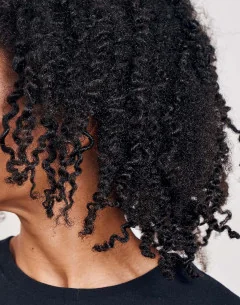
- Curly, afro, or highly textured hair — the formula preserves the hydrolipidic film and maintains the fiber’s natural hydration
- Pregnant or breastfeeding women — none of the at-risk molecules found in conventional dyes
- People undergoing medical treatment — verify with your doctor, but the absence of PPD and ammonia significantly reduces the usual contraindications
- Anyone who wants to maintain color without damaging the fiber — each application brings color while nourishing the hair
The Benefits of Dye Plants for Hair
The distinctive advantage of natural hair color is not just the absence of harmful substances — it is also the positive contribution of the plants themselves to hair quality. Several tinctorial plants have conditioning, strengthening, or restructuring properties that benefit the hair fiber with every application.
Indigo (Indigofera tinctoria) is used for dark and brown shades. It adds depth and shine to dark hair while having a smoothing effect on the cuticle. Cassia obovata, a neutral tinctorial plant for lighter hair, is renowned for its exceptional conditioning properties: it strengthens the fiber, reduces porosity, and adds shine without altering the base color. Weld (Reseda luteola) and annatto (Bixa orellana) are used in warm and copper tones, adding natural golden highlights.
Benefits observed with regular use of plant-based hair color include:
- Cuticle preservation — with no oxidizing agent, the scales remain closed, the fiber is smoother and less prone to frizz
- Reduced porosity — plant pigments partially fill surface imperfections
- Structural reinforcement — certain plants integrate with keratin and consolidate the fiber from within
- Increased shine and radiance — plant-based color reflects light better than an oxidative dye
- Less breakage and split ends — hair that has not been chemically aggressed remains stronger and more elastic
How to Cover Grey Hair with Plant-Based Color?
Grey hair coverage is one of the most frequent questions about natural hair color. The answer depends on several variables: the percentage of grey hair, its resistance (resistant grey hair, known as “stubborn”, has a more closed cuticle that absorbs pigments less easily), and the target shade.
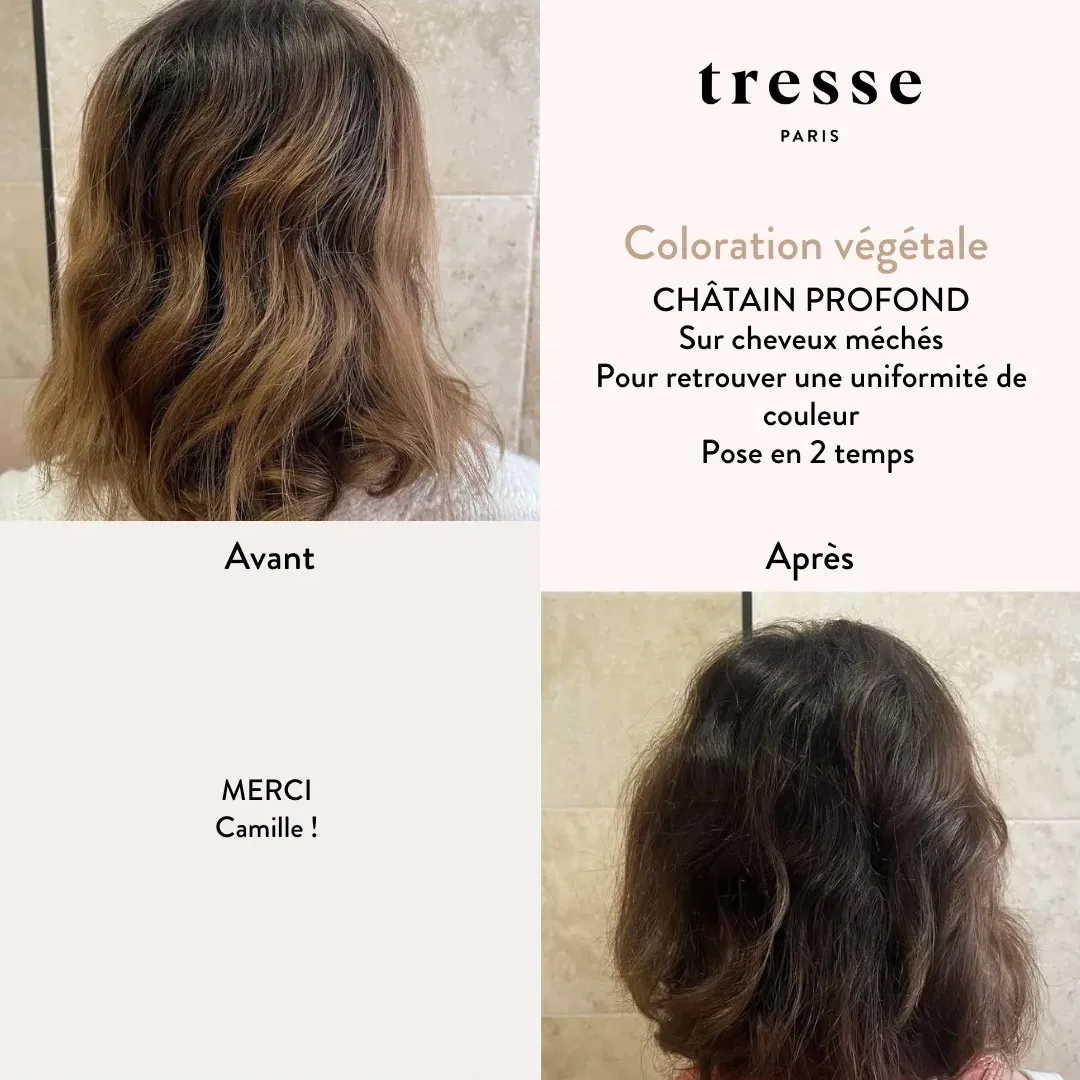
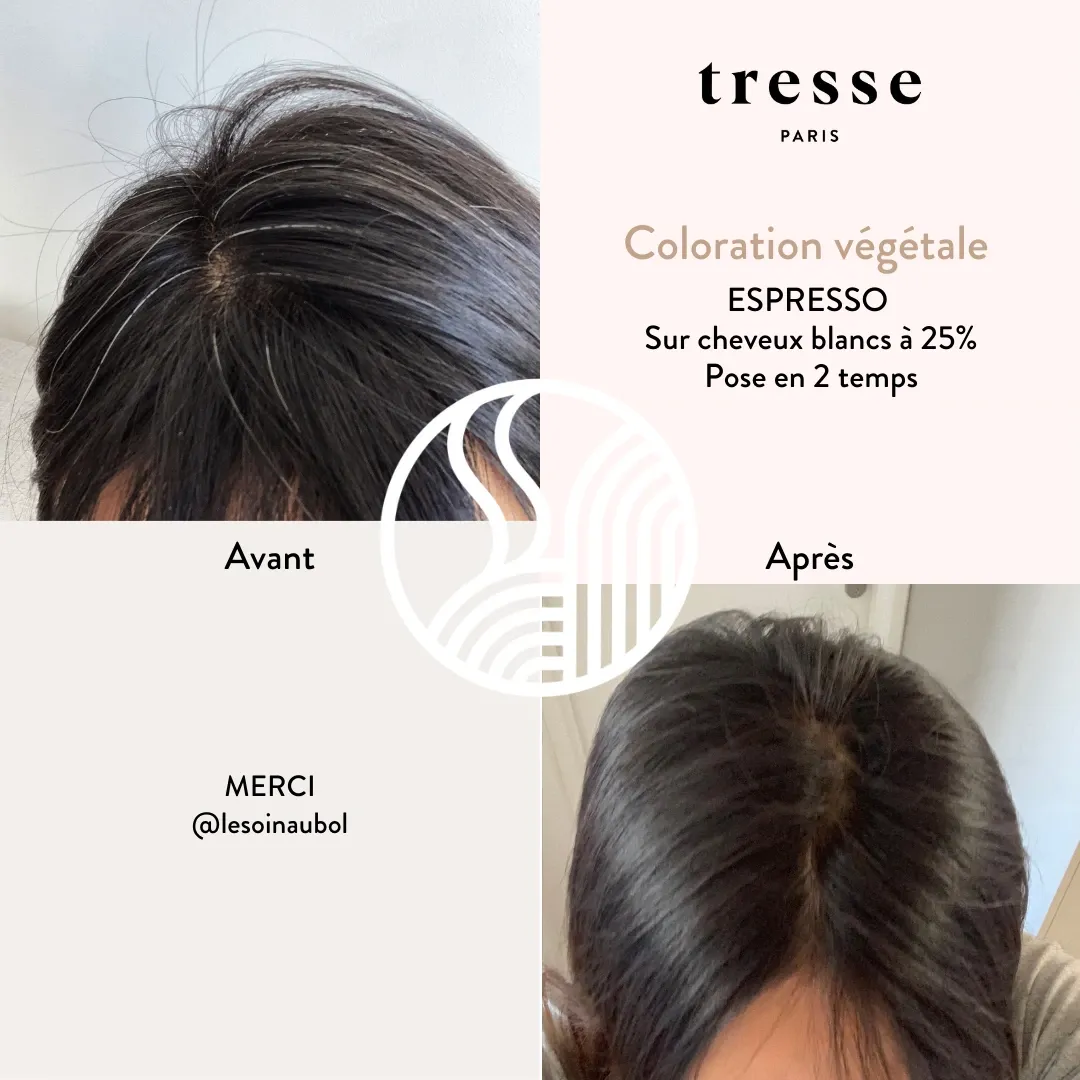
For optimal grey hair coverage, Tresse Paris developed the Base+Color 2-step method:
- Step 1 — The Base: a neutral or lightly tinted base is applied first. It prepares the fiber, gently opens the cuticle of resistant hair, and improves the adhesion of plant pigments.
- Step 2 — The Color: after rinsing the Base, the chosen shade is applied along the lengths and left on for 1 to 1.5 hours. The two combined steps ensure a saturation and uniformity of tone that a single application cannot achieve on grey hair.
This method produces a more natural result than an oxidative dye: rather than a flat, uniform coverage, it achieves a harmonious blend between pigmented and treated grey hair. The result looks close to a natural balayage and evolves gracefully between applications.
For very grey hair (over 70 % grey), it is advisable to start with shades close to the natural color before targeting darker or warmer tones. Progressing over 2 or 3 applications allows the desired saturation to be achieved without an overly intense result on a first attempt.
The Base+Color 2-Step Method: The Complete Protocol
The Base+Color method is the reference protocol developed by Tresse Paris to maximize the coverage and longevity of plant-based hair color. It is applied to dry hair, without prior shampooing (the natural sebum film helps with adherence).
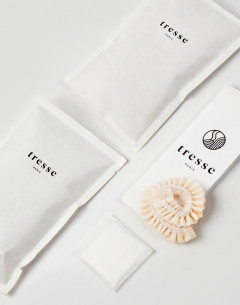
- Prepare the Base: mix the Base powder with hot water (approximately 63–65 °C) until you obtain a smooth paste with the consistency of thick yogurt.
- Apply the Base to all lengths, focusing on grey areas and regrowth. Leave on: 30 to 60 minutes depending on grey hair resistance.
- Rinse the Base thoroughly with clear water, without shampoo.
- Then prepare the Color: mix the coloring powder with hot water (60-65 °C) to obtain the same consistency.
- Apply the Color to towel-dried hair, section by section.
- Color leave-on time: 1 hour to 1 hour 30 for optimal grey coverage.
- Rinse thoroughly with water without shampooing. Avoid shampooing for the first 48 hours to set the color.
How to Choose Your Natural Hair Color?
Choosing a plant-based hair color depends on several parameters that differ from those of a conventional dye. Plant-based shades combine with the hair’s natural color rather than replacing it: the final result is the combination of the base tone and the deposited plant pigment.
Key factors to consider:
- Base tone — very light hair takes a more saturated shade than dark hair with the same color
- Percentage of grey — the more grey hair, the more visible and vibrant the final shade on those areas
- Desired result — warm tones (copper, mahogany, auburn), cool tones (cool brown, neutral black), natural tones (chestnut, golden blonde)
- Hair porosity — porous hair absorbs faster and more intensely; reduce the leave-on time by 10 minutes
- Color history — chemically colored hair absorbs plant pigments differently; a prior strand test is recommended
The Tresse Paris team is available to guide you towards the Base+Color combination best suited to your hair profile and color objective.
Plant-Based Color and Chemically Treated Hair
Transitioning from chemical hair color to natural color is entirely achievable. It requires a little planning but does not impose any abrupt break with your existing color routine.
Ground rules for a successful transition:
- Wait for 2 to 4 cm of regrowth before the first plant-based color application, to observe the result on virgin hair
- Carry out a mandatory strand test on a non-visible area before any first application
- Use the Base+Color method for areas with significant regrowth
- Accept that the transition is progressive: full harmonization can take 2 to 3 successive applications
Plant-based hair color cannot lighten hair. To maintain or deepen a shade, it is a healthy and lasting alternative to chemical dye.
Natural Hair Color: Frequently Asked Questions
How long does plant-based hair color last? On average, progressive fading is observed after 3 to 6 weeks depending on hair type, shampooing frequency, and shade. The color does not disappear suddenly but fades gradually.
Can plant-based hair color be used during pregnancy? The absence of PPD, ammonia, and endocrine disruptors in COSMOS-certified colors makes them a significantly less risky option than conventional dyes. Consult your doctor or midwife before any application.
Can tinctorial plants cause allergies? Yes, although the risk is significantly lower than with oxidative dyes. A sensitivity test (inner elbow, 48h before) is recommended before first use.
What shampoo to use after plant-based hair color? Choose gentle shampoos without harsh sulfates (SLS/SLES), which would accelerate fading. Treatments based on natural oils are compatible and prolong the brilliance of the color.